About Me
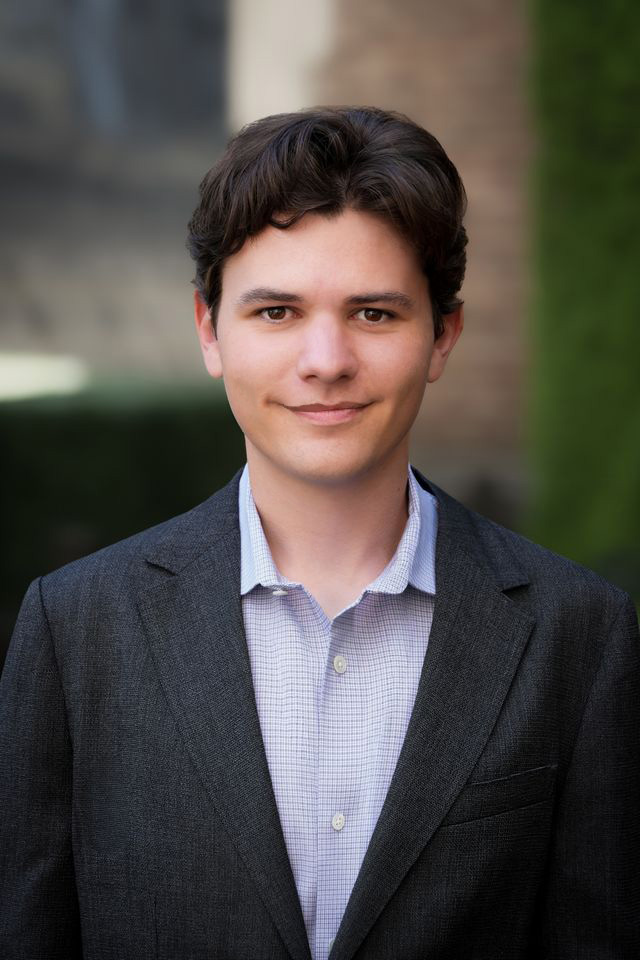
I'm a senior at Harvard College concentrating in physics and mathematics. I'm interested in using quantitative techniques from pure math and theoretical physics to solve intellectually challenging problems. I have previously worked for NOAA and Ocrolus and have experience with modeling, simulations, machine learning, and data science for applications in climate modeling and fraud detection.
I'm also an avid sports fan and am Editor-In-Chief for the Harvard Undergraduate Sports Analysis Collective. I have worked on projects investigating the predictability of AP Polls in NCAA basketball, whether tanking is effective in the NFL, and whether Luka Garza's MSU rim theory is plausible. Additionally, I help Harvard's women's basketball coaching staff with ad-hoc analytics.
My other hobbies include fishing, boating, hiking, and cooking. I'm currently working toward a USCG six-pack Captain's license.
Education
Harvard College
August 2025 - May 2027Senior concentrating in physics and mathematics. 3.92 GPA.
Williams College
August 2023 - May 20253.96 GPA. 4x Dean's List. Scored 11 on Putnam Exam freshman year.
Hunter College High School
2017 - 20234.0 GPA. Recipient of the Lillian H. Sigler award and departmental awards in English, History, and Math.
Work History
Data Analytics Intern – Ocrolus
Summer 2026- Implemented a nontraditional sampling methodology, integrated alternative data sources, and engineered an ensemble ML model to materially improve first-pay default predictions.
- Built Natural Language Processing models to process unstructured transaction data.
- Developed a topology-based tool to investigate fraud patterns not captured by existing methods.
Editor-In-Chief – Harvard Sports Analysis Collective
Spring 2026 - Present- Led an undergraduate college basketball data analytics project investigating Luka Garza's MSU rim claim by analyzing aggregate shooting and half-based plus/minus statistics.
- Assisting Harvard’s WBB coaching staff in developing analytics that drive coaching decisions.
Research Intern – Princeton University CIMES
Summer 2024- Worked with NOAA researchers at the Geophysical Fluid Dynamics Laboratory in the marine ecosystem and downscaling division to investigate the impact of forcing resolution on regional ocean model output.
- Rebuilt the data preprocessing workflow in Python and Shell to streamline model-running process.
- Ran 10 numerical simulations using a physics-based ocean model and high-performance computing.
- Built analysis pipelines to process and visualize differences in low and medium resolution model output.
Research Intern – NOAA's Geophysical Fluid Dynamics Laboratory
January 2025- Implemented Python diagnostics to identify discrepancies between representations of the Labrador Current across configurations of a regional ocean model.
Makerspace student worker – Williams College
Fall 2023-Spring 2025- Worked alongside faculty to bring their academic visions to life through design projects.
- Past projects include printing and assembling an art exhibition, creating busts of Abraham Lincoln for the Williams College Museum of Art, modeling and fabricating film development trays, and reconstructing a life-sized Mayan artifact.
- Practiced project management. Stress-tested hardware to document limits. Updated documentation and wrote reflective blog posts for each project.
Teaching Assistant – Williams College
Fall 2024- Hosted weekly review sessions and graded assignments for Physics 131: Introduction to Mechanics.
Presentations
Investigating the Effects of Changing Atmospheric Forcing Resolution in a Regional Ocean Model of the Northwest Atlantic.
Jan 2025105th American Meteorological Society Conference: 23rd Symposium on the Coastal Environment. Poster presentation.
see paperTechnical Projects
Bathymetry Image to 3D Reconstruction
- Trained computer vision models for digit and contour recognition and developed topology-aware error correction algorithms to construct 3D models.
Technical Skills
Languages: Python, SQL, R, Mathematica
ML/Data: PyTorch, TensorFlow, XGBoost, scikit-learn, Pandas, NumPy, SciPy, Xarray, Optuna, SHAP, OpenCV, Matplotlib
Platforms/Tools: AWS, Snowflake, MLflow, Git, HPC, CAD, Linux, LaTeX, 3D Printing, Anaconda, Jupyter
Relevant Coursework
Analytic Number Theory, Quantum Field Theory, General Relativity, Lie Theory, Probability Theory, Real Analysis, Abstract Algebra, Advanced Quantum Mechanics, Statistical Mechanics, Classical Mechanics, Complex Analysis, Advanced Analysis, Modern Physics.
Research
I conducted this project as part of my summer internship with Princeton’s Collaborative Institute for Modeling Earth Systems (CIMES) at NOAA’s Geophysical Fluid Dynamics Laboratory (GFDL). The goal was to determine whether the resolution of atmospheric boundary conditions applied to a regional ocean model (MOM6 NWA12) impacted the output. We found that measurements sensitive to wind speed, like chlorophyll concentration, were affected by the resolution change, while many others, like the Gulf Stream position, were not.
Investigating the Effects of Atmospheric Forcing on a Regional Ocean Model
Comparing output of MOM6 NWA12 when forced along the atmospheric boundary by low resolution SPEAR_LO and medium resolution SPEAR_MED
Expository Writing
G2 Gauge Theory
Representations of G2 and G2 Chromodynamics, with an introduction to gauge theory and color confinement.
Deformation Quantization
A mathematical study of the Weyl Transform, Moyal Algebra, and discussion of the feasibility of a mapping between classical and quantum physics
Introduction to Asymptotics
A rigorous introduction to asymptotic expansions and asymptotic analysis with examples from mathematical physics.
Even and Odd Summations
A quick overview of a powerful computation technique culminating in a fun solution to the Basel problem.
Contact
Email me